Can a Registered Dietitian in Raleigh, NC Help Me Navigate Nutrition with a Chronic Condition?

Living with a chronic condition brings enough daily challenges without adding confusing or rigid nutrition advice to the mix. You’re already managing symptoms, appointments, medications, and the emotional weight of your diagnosis. The last thing you need is another voice telling you what you’re doing wrong or offering a one-size-fits-all solution that doesn’t fit your real life. That’s where working with a registered dietitian can make a difference. They provide personalized guidance that respects your cultural foods, budget, and the realities of managing fatigue and pain. And they do this without relying on restrictive meal plans that leave you feeling defeated.

You might feel overwhelmed by conflicting information about what you “should” eat. Or you could be frustrated by healthcare providers who focus solely on weight loss as the answer to your health concerns. What if nutritional counseling could feel different? Could it be more supportive, more individualized, and less like a punishment? Working with a registered dietitian in Raleigh, NC who understands chronic conditions can provide valuable support. Choosing someone who approaches nutrition with compassion rather than control can make all the difference. One that honors your whole self and meets you exactly where you are.

What Does It Actually Mean to Work with a Registered Dietitian?

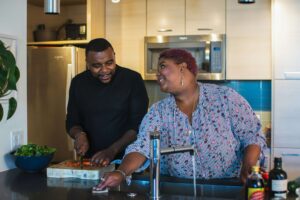
Two plus-size individuals enjoy preparing a meal together, reflecting the supportive, inclusive care offered through nutritious counseling for eating disorders in Asheville, NC and nutrition counseling in Raleigh, NC.

When many people think about seeing a registered dietitian, they imagine walking out with a rigid meal plan and a list of “forbidden” foods. This couldn’t be further from the truth when working with a Health at Every Size (HAES®)-aligned registered dietitian. Instead of following strict rules about what foods to choose for nutrition, you’ll build a collaborative relationship. This approach centers on your experience and your own expertise about your body. Your HAES®-aligned registered dietitian will help you explore the role of food in your life without judgment, shame, or restriction. We believe health comes in all shapes and sizes. True well-being is about habits that support your body and mind, not chasing societal standards or restricting what nutrition you choose.

Your dietitian becomes a supportive partner who helps you navigate the complex relationship between food and your chronic condition while honoring your individual needs and preferences. This type of nutritional counseling makes space for all the ways food shows up in your life. Your cultural foods matter, and your comfort foods have value. Emotional eating is understood as a normal human response rather than a problem to fix. Food is recognized as more than fuel; its connection, culture, comfort, and celebration. Your registered dietitian will work with you to understand how food can support your health goals while still allowing for the full spectrum of your relationship with eating.

Adapting Nutrition to the Realities of Chronic Illness

The collaborative nature of this relationship means adapting to the realities of chronic illness. Your dietitian understands that some days you’ll have more energy for meal preparation, and other days you’ll need simpler solutions. They recognize that pain, fatigue, brain fog, and flare-ups all impact how you relate to food and eating. Rather than creating unrealistic expectations, they’ll help you develop flexible strategies that work with your symptoms, not against them.

How Can Nutritional Counseling Help Me with My Condition?

A woman prepares a vibrant meal in a modern kitchen, symbolizing the supportive, personalized approach of nutritional counseling in Raleigh, NC and the guidance of nutrition counseling in Raleigh, NC for those navigating chronic health conditions.Every chronic condition brings its own unique challenges and considerations when it comes to nutrition. Nutritional counseling at Nutritious Thoughts goes beyond generic advice. It offers personalized support tailored to how your condition affects your relationship with food and eating. If you’re living with PCOS, you might have received advice to eliminate entire food groups or drastically restrict carbohydrates. A compassionate, registered dietitian helps you explore blood sugar balance without shame or fear around specific foods. This might involve some nutrition education where you will learn about gentle nutrition principles and understanding how different foods affect your energy levels. You can also discover satisfying meal combinations that support your hormonal health without giving up the foods you enjoy.

For those managing IBS, the focus shifts to gentle symptom support while avoiding the restrictive elimination cycles that can lead to food fear and social isolation. Your dietitian might help you identify patterns between foods and symptoms through mindful observation rather than rigid elimination protocols. Think of a journal for IBS as a way to track your symptoms rather than track your food choices. It’s important to remember that everyone’s IBS triggers are unique, so what works for someone else might not work for you.

Flexible Nutrition and Practical Strategies for Managing Diabetes and Chronic Pain

Living with diabetes doesn’t mean stressing over or feeling bad about your food choices. With nutritional counseling, you can learn how to keep your blood sugar stable while still enjoying meals, snacks, and a little spontaneity. You’ll get tips for handling social events, travel, and celebrations, without the food stress. Dealing with chronic pain or fatigue can make meal prep feel impossible some days. That’s where your registered dietitian comes in, helping you create a stash of easy, nourishing options for any kind of day. Think batch cooking on good days and quick, simple meals for tough ones. Or finding ways to add needed nutrition, even when relying on convenience foods or help from others.

The best part of this approach is the focus on experimenting. Your registered dietitian isn’t looking for perfection or strict rules. Instead, you’ll team up to see how different foods and habits impact your symptoms and energy. It’s all about making small, doable changes that actually fit your life; no unrealistic overhauls, just progress you can feel good about.

What If I’ve Been Told I Have to Lose Weight to Manage My Health?

You hear this a lot in healthcare, but here’s the thing: weight loss isn’t always needed, or even helpful, for managing chronic conditions. Many providers suggest it because it’s what they’ve been taught. However, research shows that what you do matters more than the number on the scale. The Health at Every Size ® approach gets it, weight isn’t a behavior. It’s an outcome shaped by things like genetics, hormones, meds, stress, sleep, and a ton of other stuff you can’t control. What you can control are things like eating regularly, moving your body in ways you enjoy, managing stress, and getting enough rest. These habits support your health, whether or not they change your weight.

In Raleigh, NC, a weight-inclusive dietitian shifts the focus from the scale to behaviors that truly support your health. No pressure, no shame. Just an approach that prioritizes your well-being, lowers stress, improves mental health, and supports your body sustainably. True health isn’t about shrinking your body; it’s about listening to it. Through collaboration, you’ll cultivate trust in your body, learning to interpret its signals and respond with care rather than control. It’s an experience rooted in respect, compassion, and connection; elements that truly make all the difference.

The Emotional Impact of Chronic Conditions & Diet Culture

Getting diagnosed with a chronic condition can stir up a lot of complicated feelings about food. You might feel ashamed of your body’s needs, guilty about past food choices, or scared of making “wrong” decisions in the future. These emotions are totally valid. Especially in a culture that tends to blame people for their health challenges. If you’ve experienced medical fatphobia or restrictive advice from healthcare providers, you might have started to question your body’s signals. This can lead to a distrust of your own hunger and fullness cues. Maybe you were told to follow strict rules about portions, meal timing, or food choices, leaving you disconnected from what your body actually needs.

Past experiences with chronic dieting or shame-based nutrition advice can leave a lasting mark, making meals feel stressful and filled with second-guessing. Feeling anxious or guilty about food? That’s your nervous system trying to protect you from past harm, it’s a response to food-related trauma. The good news? You can rebuild your relationship with food. Nutritional counseling can help you shift from judgment to curiosity and self-compassion.

Why Support from a Registered Dietitian in Raleigh, NC Might Be the Missing Piece

A woman enjoys a flavorful wrap outdoors, embodying the joyful, flexible approach promoted by a registered dietitian in Raleigh, NC and nutritional therapist in Raleigh, NC who honors cultural foods and satisfaction in nutritional care.Living with a chronic condition can feel like a full-time job. Between managing doctor’s appointments, treatments, and symptoms, not to mention simply getting through the day, it’s easy to feel overwhelmed. Nutrition shouldn’t add to the burden. It should seamlessly support your life, making things simpler and more aligned with your unique needs. Too often, nutrition becomes the missing piece of the health puzzle. It’s something left for you to navigate on your own between medical visits. That’s where a compassionate, skilled registered dietitian can make all the difference. They are someone who not only understands the science of nutrition but also the day-to-day challenges of living with a chronic illness.

Support isn’t about “fixing” you, it’s about building a partnership. A great registered dietitian listens to your story and respects your unique understanding of your own body. They provide practical tools that truly help. Whether you’re accessing care virtually, the right support seamlessly integrates into your everyday life. Working with someone who embraces your cultural food traditions and preferences makes it even better. No judgment, no strict or unrealistic rules, just sustainable strategies that honor every aspect of your life. Your health, relationships, work, and all the things that make you uniquely you.

Compassionate, Inclusive, and Sustainable Care for Your Well-Being

Your well-being thrives when care is compassionate, inclusive, and adaptable to your unique lifestyle. By focusing on sustainable approaches that respect your individuality—your body, culture, and personal values—health becomes more attainable. It becomes a balanced part of your everyday life. The right support fosters growth without judgment, creating a foundation where you can flourish in every area that matters to you.

Ready to Take the First Step Toward Managing Your Chronic Illness with a Registered Dietitian in Raleigh, NC?

You don’t need to have all the answers when it comes to navigating nutrition with a chronic illness. Whether you’re struggling with food guilt, managing restrictive habits, or looking to create a more balanced relationship with your body, our team at Nutritious Thoughts is here to help. We offer personalized nutritional counseling in Raleigh, NC, providing support and guidance tailored to your unique needs and health journey. With in-person offices in Raleigh, Hendersonville, and Asheville—or virtual sessions available across North Carolina—we’re here to help you manage your chronic illness with compassion, understanding, and respect. Let us help you rebuild trust with your body and food, one step at a time.

  • Contact us at (828) 333-0096 or email [info@nutritious-thoughts.com](mailto:info@nutritious-thoughts.com) 
  • Share your story with us
  • Your nutrition plays a vital role in managing chronic illness, and we’re here to support you every step of the way.

​​Expanded Counseling Services at Nutritious Thoughts

At Nutritious Thoughts, our support extends far beyond individual counseling. Through our Community Wellness & Education programs, we engage with schools, workplaces, and recovery centers to bring tailored nutrition counseling, workshops, and educational presentations directly to your community. Whether delivered on-site or virtually, our goal is to provide accessible wellness tools where they can make the greatest impact. Reach out to learn more about our services and pricing.

What’s a Non-Restrictive Way to Manage Diabetes? A Look at Nutritional Counseling in Raleigh, NC

If you’ve ever been told that managing diabetes means saying goodbye to whole food groups or skipping the meals you love, it can feel overwhelming. You might also find yourself frustrated by the idea of locking into a rigid plan for life. That message is everywhere; online, in doctor’s offices, even from well-meaning friends or family. But here’s the truth: nutritional counseling can help you see that restriction isn’t the only way to support your blood sugar and well-being. 

In fact, overly rigid rules can backfire, leaving you stressed, deprived, and disconnected from your body. At Nutritious Thoughts, we believe there’s a different path—one that doesn’t require constant food rules or fear. With the guidance of a registered dietitian, you can explore a flexible, non-restrictive approach to diabetes care. This kind of nutritional counseling supports your health while also protecting and honoring your relationship with food.

Two people enjoy a balanced breakfast at a café, showing how a registered dietitian in Raleigh, NC supports real-life eating experiences through eating disorder therapy in Raleigh, NC.Why Restriction Often Backfires

When people are newly diagnosed with diabetes, they’re often handed a long list of “eat this, not that” rules. At first, it might feel empowering to follow them, you’re doing something to help your health. But over time, that strictness can turn into a constant mental tug-of-war with food. You may find yourself thinking about the things you “can’t” have more than ever. That focus can increase cravings and leave you feeling discouraged, or even lead to rebound overeating.

Restriction can also take an emotional toll. Food is about so much more than nutrients; it’s part of celebrations, culture, and connection. When those parts of life get stripped away in the name of “control,” it’s easy to feel isolated or disconnected from yourself and others. A non-restrictive approach looks at how to care for your body without creating that emotional and social cost.

Rethinking Carbohydrates

One of the biggest myths in diabetes care is that carbs are the enemy. The truth is, carbohydrates are your body’s primary source of energy, and your brain depends on them to function well. Completely cutting them out isn’t necessary, and for most people, it isn’t sustainable. Instead of avoiding carbs altogether, nutritional counseling focuses on understanding how they work in your body.

That might mean noticing which foods keep your energy steady and how different combinations of carbs, protein, and fat affect your blood sugar. It can also mean finding ways to enjoy the foods you love without fear. Working with a registered dietitian can help you see carbs as part of a balanced, satisfying way of eating, not something to be eliminated.

Two women discuss a meal plan together in a bright, modern kitchen, illustrating the supportive relationship between a nutritional therapist in Raleigh, NC and someone exploring disordered eating therapy in Asheville, NC.How Nutritional Counseling in Raleigh, NC Supports Diabetes Care

Managing diabetes in a non-restrictive way doesn’t mean ignoring your health. Rather, it means approaching it with flexibility, compassion, and curiosity. In sessions at Nutritious Thoughts, we take time to understand your life, your preferences, your cultural food traditions, and your goals.

Instead of prescribing a generic plan, we collaborate to create an approach that works for you. That could mean adjusting meals you already enjoy to support more stable blood sugars. It could also involve helping you navigate dining out without anxiety, or finding simple, realistic ways to prepare food when life feels busy. The goal is to make your diabetes care feel like it fits into your life, not the other way around.

Sustainable Habits Without Food Fear

Long-term health isn’t built on willpower, it’s built on habits that you actually want to keep. A non-restrictive approach to diabetes care focuses on adding supportive practices instead of constantly taking things away.

That might mean:

  • Start your day with a satisfying breakfast you enjoy, like pairing your favorite bread with eggs and avocado, for steady energy and satiety. 
  • Choose snacks that combine carbohydrates and protein to help keep your blood sugar steady throughout the day.
  • Learn ways to prepare your favorite comfort meals so they support your health while still offering the flavors and connection you love.
  • Explore beverages or sides you genuinely enjoy that contribute to the satisfaction of your meals and align with your overall well-being.

These changes are meant to be gentle and realistic, so you’re not left feeling deprived or burned out. Instead of aiming for perfection, you can focus on making small, supportive adjustments that feel doable. Even modest shifts can improve your health and well-being. The key is finding strategies that work for your body and your life.

The Emotional Side of Diabetes Care

Diabetes management is often talked about as if it’s purely physical. That it’s all numbers, lab results, and food logs. But the truth is, it’s also deeply emotional. Being told to give up foods you love, constantly monitor yourself, and meet strict targets can feel exhausting. It’s no wonder many people experience burnout, guilt, or shame around food and body image. In nutritional counseling, we make space for that emotional side. You might be carrying the  years of diet culture messages or past experiences of feeling judged for your food choices. A registered dietitian can help you untangle those beliefs so you can approach food from a place of self-trust rather than self-criticism.

Smiling woman enjoying a meal outdoors, representing a positive relationship with food through nutrition therapy in Raleigh, NC and support from a dietitian in Hendersonville, NC.A Day of Non-Restrictive Diabetes Care

Instead of handing you a list of exact meals to follow, nutritional counseling focuses on helping you discover what works for you. A registered dietitian at Nutritious Thoughts can work with you to find meals, snacks, and food combinations that fit your lifestyle and honor your cultural preferences. They can also help you discover ways to keep your blood sugar steady, all without unnecessary restriction. Together, you might explore different breakfast ideas and experiment with snacks that satisfy you and support your energy.

You might also adapt your favorite dinners so they still bring joy while aligning with your health needs. Rather than aiming for a one-size-fits-all menu, the goal is to build a flexible toolkit of options you can choose from. That way, your day-to-day eating feels balanced, satisfying, and sustainable. There’s no “good” or “bad” here, just nourishment that supports your whole self.

Finding Your Own Starting Point

If you’ve been living with the pressure of restrictive eating, you might be wondering if it’s even possible to manage diabetes without it. The answer is yes. And you don’t have to figure it out on your own. Working with a registered dietitian in Raleigh, NC at Nutritious Thoughts can help you discover a realistic balance. This means supporting your blood sugar while also honoring and protecting your relationship with food. With nutritional counseling you can learn strategies that keep you nourished, satisfied, and supported, without the constant food rules or guilt.

Is Nutritional Counseling in Raleigh, NC the Next Step in Your Diabetes Care?

If you’ve been navigating diabetes with strict food rules or constant pressure to avoid certain foods, you may be wondering if there’s another way. Nutritional counseling in Raleigh, NC offers a compassionate, flexible approach that supports your blood sugar and your relationship with food. At Nutritious Thoughts, we help you find a way of eating that works for your body and your life—without the guilt, shame, or rigid restrictions. Our registered dietitians work alongside you to create a plan that’s sustainable, satisfying, and rooted in your values.

  • Contact us at (828) 333-0096 or email info@nutritious-thoughts.com
  • Tell us more about yourself
  • You deserve diabetes care that supports your whole self—not just your numbers.

Expanded Counseling Services at Nutritious Thoughts

At Nutritious Thoughts, nutritional counseling in Raleigh, NC is just one way we serve and connect with our community. Alongside individual sessions, we offer Community Wellness & Education programs that bring inclusive, supportive conversations about food, body trust, and well-being into schools, treatment centers, and workplaces. These workshops create a space to reflect, explore, and gently reimagine your relationship with food in a shared, compassionate setting. Whether offered virtually or in-person, our goal is always to make weight-inclusive, accessible support available where it’s needed most. Reach out to learn how we can partner with your organization.

What Is Intuitive Eating—and Can It Actually Work for Me?

You’ve heard of intuitive eating, but you’re skeptical. There’s a lot of misinformation out there, and you’re not sure if it’s just another trend. Maybe you’ve tried it before but it didn’t feel right for you. Perhaps, you’ve read a book about it or scrolled through one too many “eat what you want!” posts that left you more confused than confident. If it still feels hard—if you’re wondering,“Is this even working for me?”—nutritional counseling can help you understand and implement intuitive eating in a way that works for you. Most people come to intuitive eating not because they’re trying to be trendy, but because they’re tired. Tired of having to overthink their food choices or under societal pressure to do it “right”.

It’s exhausting feeling as if you’re constantly bouncing between restriction and guilt. It’s no surprise if you’re feeling confused! After years of mixed messages, it’s tough to figure out what really feels right for your body. Here’s the thing: intuitive eating isn’t something you “master.” It’s not a checklist or a goal to crush. Rather, it’s a relationship to foster. A connection with your body, your signals, your values. And like any relationship, it takes time, patience, and support. That’s where we come in. With nutritional counseling in Raleigh, NC, you don’t have to navigate this alone. We’re here to help.

A woman places a homemade dish into the oven, reflecting the everyday nourishment and self-care explored with a nutritional therapist in Raleigh, NC through compassionate nutrition therapy in Raleigh, NC.Why Intuitive Eating Feels So Hard (And Why You’re Not Doing It Wrong)


For years, you’ve probably been told not to trust your own body. Eat at this time. Finish your plate. Don’t eat that. Stick to the plan. So when someone says, “Just listen to your body,” it can feel like trying to speak a language you haven’t used in forever. That’s normal. If hunger and fullness signals feel unclear, it doesn’t mean something’s wrong with you. And if you’re not even sure what satisfaction means anymore, that’s okay too. It just means your body and your relationship with food could use a little extra care. That’s exactly what we’ll focus on together in nutrition counseling.

Intuitive eating is about coming back to your body’s wisdom. Your body knows what it wants and needs, and it’s up to you to listen to those signals. That means tuning into hunger, fullness, and satisfaction. But don’t forget about the context, emotions, environment, and access. It’s not a hunger/fullness food plan or about ignoring nutrition. And it’s also not about “proving” to anyone, even yourself, that you’ve broken free from chronic dieting.

It’s about pausing and asking yourself: “What do I need in this moment?” or “What would truly nourish me?” Not just physically, but emotionally too. And doing that without guilt, shame, or outside rules. And yes, gentle nutrition is a part of intuitive eating. But it doesn’t come first. It comes after we’ve made space for permission, curiosity, and attunement. Because nutrition isn’t the full picture, you are.

Can Intuitive Eating Actually Work for You?

Let’s be honest: this question often shows up after someone has tried intuitive eating and still doesn’t feel confident. Maybe you’ve been told to “just eat when you’re hungry,” but you’re not sure you even feel hunger. Or maybe you find yourself constantly reaching for the same foods and wondering if you’re doing something wrong. This isn’t a sign that intuitive eating doesn’t work. It’s a sign that you need more support, real, personalized support. Not advice from Instagram or “eat like me” meal breakdowns. Support that takes you into account. Your history, identity, and body. That’s what you get when you work with a registered dietitian who understands that nutrition isn’t just about what’s on your plate. It’s about your relationship to food, your body, and your life.

What Working with a Registered Dietitian in Raleigh, NC Actually Looks LikeA man sits in a cozy café enjoying a croissant, reflecting on mindful eating and self-trust—supported by a registered dietitian in Raleigh, NC and a nutritional therapist in Raleigh, NC.

Maybe you’re hesitant to work with a registered dietitian because you don’t know what that entails. You’re used to seeing your PCP and having weigh-ins. Or you’re asked to do meal logs or try tracking apps. At Nutritious Thoughts, that’s not what it is at all. It’s just a real conversation. We might explore what hunger feels like in your body. Or, we might unpack why a certain food feels emotionally charged. Also, we might talk about how stress shows up in your appetite, or how your childhood shaped your food beliefs.

We’ll meet you wherever you are, whether that’s eating one consistent meal a day or wondering why satisfaction feels out of reach. Nutritional counseling in Raleigh, NC isn’t about fixing you. It’s about reconnecting you to your own cues and values. And if you’re navigating health concerns, like diabetes or GI issues, we can work those into the conversation, too! All without shame or rigid plans.

The Messy Middle Is Still Part of the Process

Some days you’ll feel really connected to your body. Other days, food might still feel complicated. That’s okay. That doesn’t mean intuitive eating isn’t for you. It just means you’re human, and this work takes time. If you feel like you’ve tried intuitive eating and it didn’t “stick,” that doesn’t mean it failed. It probably means the support wasn’t built around you. You deserve more than generic advice, you deserve care that considers your whole story.

A woman enjoys a smoothie outdoors, capturing a moment of self-care and body connection supported by a registered dietitian in Raleigh, NC through nutritional counseling in Raleigh, NC.You’re Allowed to Want Something Different

If you’re here, chances are you’re already craving something different. Something more sustainable, more supportive, and more compassionate. You’re tired of fighting your body. You’re tired of food being a project. And you’re allowed to want peace. At Nutritious Thoughts, we offer nutritional counseling in Raleigh, NC that centers you. Your pace, values, and body. Our work is weight-inclusive, trauma-informed, LGBTQIA+ affirming, and rooted in respect. Because you’re the expert on your body, we’re just here to help you listen to it again. Intuitive eating doesn’t promise perfection. But it does offer a way back to yourself. And we’re here when you’re ready to start.

Ready to Try Intuitive Eating with a Registered Dietitian in Raleigh, NC?

What if food didn’t have to feel so complicated? What if you didn’t have to figure it out alone? At Nutritious Thoughts, we offer nutrition counseling rooted in intuitive eating—without rules, guilt, or pressure. Our team of compassionate registered dietitians supports you in building trust with your body and finding a way of eating that actually works for your life.

With offices in Asheville, Hendersonville, Cary/Raleigh, and virtual services across North Carolina, our care is accessible no matter where you are. Whether you’re just starting to explore intuitive eating or you’re looking for guidance to deepen your practice, we’re here to walk with you.

  • Contact us at (828) 333-0096 or email us at info@nutritious-thoughts.com
  • Tell us more about yourself
  • You deserve support that meets you where you are—and helps you come home to yourself.

Expanded Counseling Services at Nutritious Thoughts

At Nutritious Thoughts, our support extends far beyond individual counseling. Through our Community Wellness & Education programs, we engage with schools, workplaces, and recovery centers to bring tailored nutrition counseling, workshops, and educational presentations directly to your community. Whether delivered on-site or virtually, our goal is to provide accessible wellness tools where they can make the greatest impact. Reach out to learn more about our services and pricing.

How a Registered Dietitian Supports You in Intuitive Eating—Without Food Rules or Pressure

If you’ve ever found yourself saying, “I want to trust my body, but I just don’t know how,” you’re not alone. Many people come to intuitive eating feeling worn down. It’s tiring to second-guess whether your meal is as nutritious as the recipe claims, or being told to follow the latest food trends. Honestly, you’re probably tired of food feeling like a source of stress instead of connection. You’ve probably tried intuitive eating on your own and have read the books, done the research, and thought it through. But it still feels hard. You can’t tell if you’re listening to your hunger cues or emotionally eating. Then there’s the cravings. You know they’re normal, but what do they mean? Intuitive eating is personal, and following generalized advice from books or others’ experiences might not be enough to make it truly work for you. Working with a registered dietitian can help you see that intuitive eating isn’t about being perfect. It’s a process, a journey to reconnect with your body and find your way back to yourself.

A woman prepares food in a cozy kitchen, reflecting the everyday moments supported through nutrition therapy in Raleigh, NC and compassionate nutrition counseling for eating disorders in Raleigh, NC.Why Intuitive Eating Feels So Hard (And Why That Makes Sense)

We’re rarely told to trust our bodies. In fact, most of us were taught the opposite. We learned to question them, ignore their signals, and rely on outside cues instead. Like eating because it’s “time” or finishing your plate even if you’re already full. Over time, it gets harder to really hear what your body wants or needs. So when someone says, “Just listen to your body,” it’s no wonder it feels confusing. You’re not on the same wavelength anymore, you can’t quite understand the signals or know how to respond.

Reconnecting with your body takes time. Your relationship with food and your body is layered—it’s shaped by your experiences, cultural messages, expectations you didn’t choose, and so much more. Rebuilding that trust isn’t an overnight fix. It’s about noticing, softening, and slowly reconnecting. And it’s not a sign of failure, it’s part of being human. That’s why nutrition counseling can help clear the confusion and remind you that this process isn’t meant to happen all at once.

What Intuitive Eating Really Is (and Isn’t)

Intuitive eating isn’t about throwing structure out the window, it’s about trusting yourself. It’s about listening to what your body needs (whether that’s physical, emotional, or sensory) and responding with care. It’s not about following strict rules or trying to eat a certain way due societal expectations. Instead, it’s about combining basic nutrition with how food actually feels for you. It’s about figuring out what fuels your energy, lifts your mood, and keeps you satisfied, without any guilt or judgment.

When you’re feeling stuck or unsure where to begin, a registered dietitian in Asheville, NC or  a registered dietitian in Raleigh, NC can be a great resource. Together, you can work on making eating feel more connected to your values and needs. This might mean sharing a snack during a session, trying out recipes or cooking tips, finding movement that feels good, or just talking through whatever’s on your mind. A registered dietitian can clear up all the confusion around nutrition and health. They’ll give you straightforward, evidence-based advice to help you make the best choices for your unique needs. Because it’s a personalized approach, not a one-size-fits-all plan.

Two people enjoy balanced, colorful meals together—highlighting the approachable, personalized support offered through nutrition therapy in Raleigh, NC with a registered dietitian in Raleigh, NC.How a Registered Dietitian Supports Intuitive Eating Without Rules

Nutrition counseling at Nutritious Thoughts in Asheville and Raleigh, NC isn’t about strict rules or one-size-fits-all advice. It’s about creating a space to pause, reflect, and truly listen to what your body needs. Curious about what that might look like?

Getting Curious Instead of Controlling

There’s no rigid list of foods to eat or avoid here. Instead, you’ll work with your registered dietitian to notice patterns. What makes you feel calm and grounded? What triggers stress around eating? When does your body crave certain foods or lean into emotional eating? You’ll work together to tune into your body’s signals and unpack the habits and beliefs you’ve formed around food. Whether it’s messages from childhood, cultural pressures, or the food options you had access to. Then? You will learn ways to navigate these triggers and make choices that align with YOUR values, needs and goals.

Personalizing Support Based on You

There’s no single “right” way to eat, and that’s why one-size-fits-all nutrition advice often doesn’t work. Your relationship with food is personal, and it deserves to be treated that way. Generic meal plans and diet culture doesn’t take into account your unique needs, goals, or preferences. That’s why we’re all about personalized support that prioritizes you. Nutrition counseling is about meeting you where you are while also honoring cultural foods, working with sensory preferences, and making room for your emotions. Together, we’ll find what works for your life, your goals, and what truly matters to you.

Integrating Gentle Nutrition—When You’re Ready

Nutrition education is helpful, but it’s not always the first step. Chances are, you already know the basics and what’s typically recommended. But what does gentle, personalized nutrition actually look like? It’s not about cutting out the foods you love or following strict rules that don’t take you, as a whole, into consideration. It’s about balance and creating habits that feel good and last. It means tuning into your body’s hunger and fullness cues, enjoying meals that satisfy you, and including all food groups in a way that works for you. Simple, sustainable, and stress-free.

Embracing Mindful Eating

Once you start tuning into your body’s signals, we can explore what truly nourishes you. Maybe it’s noticing which foods keep your energy steady or which meals feel the most satisfying. In sessions, this might mean eating a snack together. As you eat, your dietitian might ask: How does it feel? What does it taste like—sweet, salty, sour? Take your time with your food. Savor it, enjoy it, and let it truly satisfy you. It’s a simple way to show your body you’re listening and giving it what it needs.

Holding Space for the Messiness

Intuitive eating isn’t about being perfect. Some days it’ll feel easy, and other days it might feel totally out of reach, and that’s okay. At Nutritious Thoughts, we’re here to help you work through those moments without shame or pressure. We’re all about self-compassion and body acceptance, and we know breaking away from diet culture can be messy. Intuitive eating isn’t a straight path, and it’s normal for it to take time. We get it, and we’re here to support you every step of the way.

Two women smile while meeting over a laptop and food, reflecting the collaborative, supportive approach of a registered dietitian in Raleigh, NC and nutritional counseling in Hendersonville, NC.What You Won’t Be Told to Do

No need to log meals, count calories, or cut out your favorite foods. That kind of stress doesn’t help you truly nourish your body or rebuild a relationship with food. Instead, we focus on tuning into your body’s natural hunger and fullness signals, honoring your cravings, and finding what works best for YOU. Everyone’s journey is different, and that’s exactly how it should be. When you work with a registered dietitian in Asheville, NC or registered dietitian in Raleigh, NC, you’ll get support and respect, not judgment. You know your body best. We’re here to help you trust and honor that.

Nutrition counseling is all about finding what truly works for you—what nourishes your body, mind, and soul. In a world that pulls you in every direction, it’s easy to lose touch with yourself. That’s why we’ve created a space where you can tune out the noise and reconnect with your inner wisdom. Together, we’ll practice asking: What do I need right now? What feels good? What helps me feel at home in my own skin? Because these things usually get overlooked when diet culture and societal standards are constantly in your face.

You Don’t Have to Figure It Out Alone

Intuitive eating doesn’t have to feel so hard, and struggling with it doesn’t mean you’re doing it wrong—it means you might need some support. At Nutritious Thoughts, we’re here to help. Our team of registered dietitians offers compassionate, flexible, and curious guidance to help you reconnect with your body.  Nutrition counseling in Asheville, NC or nutrition counseling in Raleigh, NC isn’t about controlling your eating, it’s about learning to trust yourself again. Together, we’ll help you find a way of eating that feels good, not because of rules, but because it reflects care. You deserve to feel at ease with food, and we’re here when you’re ready.

Intuitive Eating Support with Nutrition Counseling in Cary/Raleigh, Asheville, Hendersonville, and Throughout NC

Everyone needs support sometimes, especially when you’ve been taught to ignore your body’s natural cues and trust external rules for eating. At Nutritious Thoughts, we offer nutrition counseling that is rooted in the principles of intuitive eating. Our team of compassionate and knowledgeable registered dietitians can help you learn to trust your body and make food choices that support your physical, mental, and emotional well-being. There are no set expectations, just a space for exploration and empowerment.

With offices in Asheville, Hendersonville, Cary/Raleigh, and virtual services across North Carolina, we make nutrition counseling easy and accessible wherever you are. Whether you’re curious about intuitive eating, ready to get started with it, or anywhere in between, our registered dietitians are here to support you every step of the way. So, why wait? Take the first step:

  • Contact us at (828) 333-0096 or email us at info@nutritious-thoughts.com
  • Tell us more about yourself
  • You can reconnect with your body’s signals and begin making food choices that feel grounded, confident, and truly your own.

Expanded Counseling Services at Nutritious Thoughts

At Nutritious Thoughts, our support extends far beyond individual counseling. Through our Community Wellness & Education programs, we engage with schools, workplaces, and recovery centers to bring tailored nutrition counseling, workshops, and educational presentations directly to your community. Whether delivered on-site or virtually, our goal is to provide accessible wellness tools where they can make the greatest impact. Reach out to learn more about our services and pricing.

How Nutrition Counseling Helps You Navigate Emotional Eating Without Shame

Emotional eating gets a bad reputation and is often thought of as a negative thing. Blogs, books, and even other medical professionals often talk about it as something to be controlled, stopped, or overcome. They tell you to “stop stress eating” or “control emotional eating”. As if the act of finding comfort in food is something to be ashamed of. Yet, food and emotions are deeply connected. They can remind you of home, provide solace during difficult times, and even bring people together. So, why is this made out to be a bad thing? Nutrition counseling offers a way to explore these connections without shame—and without trying to “fix” something that isn’t broken.

The idea that eating should only be about fueling your body, never for comfort, joy, or connection? That just doesn’t reflect how we actually live. Food is a part of your memories, our daily experiences. Even your body can crave certain foods to help you feel better. That’s why nutrition counseling can be so helpful in navigating emotional eating without shame. Nutrition counseling gives you a safe space to dive into your emotional eating. Without any judgment or the need to “fix” anything. It allows you to better understand your patterns. But it also allows you to unpack the deeper reasons behind them, and develop a more attuned relationship with food. One that honors both your body and emotions.

Creating a Safe Space to Explore Emotional Eating Two women smile and collaborate while working on a laptop, highlighting the supportive approach of nutritional counseling in Raleigh, NC with a nutritionist in Raleigh, NC to create personalized, sustainable wellness strategies.

One of the most powerful aspects of nutrition counseling is that it’s not about restriction, guilt, or control. It’s about understanding, validation, and empowerment, all in a space that’s free of judgment. Often people don’t talk about their emotional eating because of the shaming and judgmental messages around it. It makes sense that you would fear talking about this. Especially when you’re constantly told that it’s “wrong” or that you just need more willpower. But the reality is that emotional eating is a coping mechanism. And like any other coping mechanism, it needs to be understood and addressed in a supportive way. Plus, food isn’t just fuel to our bodies. It has cultural, social, and emotional significance, especially during difficult times. And, it can be a big part of how you care for yourself.

Nutrition counseling gives you the space to talk with a registered dietitian. It gives you the time and space to be curious about the reasons behind your emotional eating. Together, you can begin to recognize what’s happening beneath the surface when you reach for food in response to emotions. Maybe your emotional eating has been your way of coping with stress, anxiety, or loneliness. Or maybe it’s been a form of self-soothing that’s helped you feel safe and comforted in the past. Whatever the reason, instead of focusing on stopping emotional eating, counseling helps you explore why it’s happening. Along with what your body and mind are truly asking for.

Understanding the Root of Emotional Eating

Emotional eating isn’t just about the food. It’s about how you connect with yourself. Everything in life is a relationship, and food is no different. When you turn to food for emotional reasons, it’s a way of trying to fulfill an unmet need or soothe uncomfortable emotions. This could be due to past experiences, beliefs about yourself and food, or simply not having the tools to cope with difficult emotions. But with the support and guidance of a registered dietitian or nutritionist, you can dig deep and uncover the root causes of your emotional eating. Then, you start addressing the underlying issues instead of focusing solely on the food aspect. When you’re working with your registered nutritionist in counseling, you can unpack your relationship with food by reflecting on questions like:

  • What feelings usually trigger emotional eating for you? 
  • How did your relationship with food develop as you grew up? 
  • When you eat for comfort, what emotions are you trying to soothe or avoid? 
  • Are you listening to your hunger cues during the day, or are restrictions causing you to turn to food later on?

In a safe, supportive space, you can start shifting from guilt to understanding. Emotional eating isn’t a failure on your part nor is it wrong. It’s a signal from your body that something isn’t right and needs to be addressed.  This can be a signal that something deeper, like stress, exhaustion, or loneliness, needs your attention and care. By exploring the root of your emotional eating, you can develop a stronger sense of self-awareness and work towards making choices that truly align with nourishing your mind and body.

Moving Away from Diet Culture & Shame A man prepares a nutritious meal with fresh ingredients, highlighting the benefits of nutrition therapy in Raleigh, NC with guidance from a nutritionist in Raleigh, NC for a balanced and mindful approach to eating.

Ever been told to “just have more discipline” or “cut out trigger foods”? That’s diet culture talking. It makes emotional eating seem like a flaw. It says eating when you’re not physically hungry is bad. That finding comfort in food is wrong. That resisting cravings and cutting out certain foods will somehow “fix” everything. Yet, here’s the thing, taking away food doesn’t take away the need your body has for comfort and nourishment. It only adds more pressure and shame, leading to a vicious cycle of restriction followed by bingeing. If you’ve been turning to food for emotional comfort, trying to restrict it will only make things harder. The goal of nutrition counseling isn’t to control your eating, it’s to help you reconnect with your body in a way that feels safe and supported.

That’s why our approach focuses on curiosity, not control. Instead of viewing emotional eating as a problem to be solved, we see it as a conversation your body is having with you. Nutrition counseling can help you break free from the guilt that often comes with emotional eating and replace it with self-compassion. Society tells you this is something to feel guilty about or that it’s “wrong”. But in reality, emotional eating can be a form of self-care. It’s a way to cope with difficult emotions and provide comfort when you need it most.

By acknowledging this and treating yourself with kindness, you can begin to transform your relationship with food. That’s why we start by recognizing the patterns. When and why do you turn to food for emotional reasons?  What emotions are you trying to cope with? By bringing awareness to these triggers, we can work towards finding coping mechanisms that work for you and your lifestyle while still nourishing your body. It’s not about eliminating emotional eating altogether, but rather finding balance and creating a positive relationship with food and your body.

It’s not about restricting certain foods or labeling them as “bad”.

Often, other medical professionals, social media influencers, and diet trends may promote restrictive diets or labeling certain foods as “bad”. However, food is not a moral issue, and we do not believe in restrictive eating. Our approach to nutrition counseling is rooted in the belief that all foods can fit into your lifestyle. We encourage you to listen to your body’s cues and honor its cravings, while also incorporating nutrient-dense foods to nourish your body. By removing the guilt and shame associated with food, you can begin to make choices that truly serve your body’s needs. We believe in empowering individuals to trust their bodies and make informed decisions about their health.

Our goal is to empower you and provide tools for long-term success. This is why at Nutritious Thoughts our team of registered dietitians encourage a non-diet approach that focuses on intuitive eating and honoring your body’s natural cues. This means listening to your body’s signals of hunger and fullness, rather than following strict rules or restricting certain foods. We also believe in incorporating joyful movement and finding ways to enjoy physical activity, rather than viewing it as a punishment for food choices.

The Role of Attuned Eating in Emotional Well-Being A woman enjoys a meal while listening to music, embracing a balanced approach to eating with guidance from a dietitian in Hendersonville, NC and a nutritionist in Raleigh, NC.

Attuned eating is all about tuning into your body’s cues, respecting both your physical and emotional needs, and ditching those external food rules. It’s a key part of nutrition counseling that helps you rebuild trust with your body. You learn to trust that your body knows what it needs, that all foods can fit into your life, and that emotions don’t have to take over. Attuned eating shifts the focus away from labeling foods as “good” or “bad” and instead asks, what feels nourishing and supportive right now?

It’s about learning to tell the difference between emotional and physical hunger, but also about allowing yourself to eat emotionally without guilt. Emotional eating isn’t inherently harmful, it only becomes an issue when it’s the only tool you have to cope. We know this can be a vulnerable process, and it’s so important to create a safe, supportive space for you to explore your relationship with food and body image. Emotional eating and curiosity are closely connected, which is why building trust with your nutrition counselor matters so much.

Diet culture has taught us to feel guilt and shame around food, but in nutrition counseling, the focus is on creating a relationship where you feel seen, heard, and understood. We’re not here to give you a list of rules or tell you what to eat. Instead, we’re here to offer an open, supportive space where you can explore your relationship with food without fear of judgment. This is a place to share your experiences with emotional eating, get guidance tailored to your unique needs (not some one-size-fits-all diet advice), and feel supported as you move at your own pace. Healing your relationship with food isn’t about willpower or discipline—it’s about creating safety around food, noticing patterns with curiosity, and building coping skills that truly work for you.

Finding Peace in Your Relationship with Food

Emotional eating doesn’t have to feel like a constant struggle, and it’s definitely not something you need to “fix” or feel bad about. Instead, it can be a chance to pause, reflect, and discover what you really need in a way that feels nourishing and satisfying.   If you’re ready to build a healthier relationship with food, one based on self-trust, awareness, and compassion, nutrition counseling in Raleigh & throughout North Carolina can help. We’re here to guide you through emotional eating without judgment, so you can feel more confident, clear, and at ease. Because food should be about self-care, not self-criticism. You deserve support that truly helps you take care of yourself, mind, body, and soul.

Compassionate Support for Emotional Eating Through Nutrition Counseling in Cary/Raleigh, Asheville, Hendersonville, and Across North Carolina

Emotional eating isn’t something to “fix”, rather it’s something to understand. At Nutritious Thoughts, our registered dietitians and nutrition counselors help you explore your relationship with food in nutrition counseling, which is a non-judgmental space, free from diet culture. Instead of shame, we focus on compassion, curiosity, and lasting change that honors your needs. With locations in Asheville, Hendersonville, and Cary/Raleigh, plus telehealth services across North Carolina, we make accessible, shame-free support available wherever you are. Whether you’re untangling emotional eating, chronic dieting, or just want a healthier relationship with food, we’re here to walk alongside you. So why wait? Take the first step towards a healthier relationship:

  • Contact us at (828) 333-0096 or email us at info@nutritious-thoughts.com
  • Tell us more about yourself
  • You deserve a relationship with food that feels safe, intuitive, and free from guilt.

Expanded Counseling Services at Nutritious Thoughts

At Nutritious Thoughts, our support extends far beyond individual counseling. Through our Community Wellness & Education programs, we engage with schools, workplaces, and recovery centers to bring tailored nutrition counseling, workshops, and educational presentations directly to your community. Whether delivered on-site or virtually, our goal is to provide accessible wellness tools where they can make the greatest impact. Reach out to learn more about our services and pricing.

Is Seeing a Registered Dietitian Worth It?

As a practice of registered dietitians, our answer is: of course, seeing a registered dietitian is worth it! But also it’s not simply about booking an appointment with the first one you find. The real value lies in finding someone who excels in nutritional counseling and takes time to truly understand your unique needs and experiences. A skilled registered dietitian won’t just give you generic advice or craft a generic plan. They’ll listen closely, and consider your life, preferences, and goals, to develop strategies that work for you. Because truth be told, you know what is best for your body.

When it comes to nutrition and well-being, there is no one-size-fits-all solution. Each person has different goals, challenges, and lifestyles that need to be taken into account when creating a personalized nutrition plan of action. That’s why seeking the guidance of a registered dietitian, that centers you, can make all the difference. For those seeking nutritional counseling in Raleigh & throughout North Carolina, the right registered dietitian can be a game-changer. They will go beyond general nutrition education and will work with you to develop a plan that meets your specific needs.

What Makes a Registered Dietitian Different? A woman reads a cookbook in a modern kitchen, focusing on mindful eating and nourishment. Explore nutrition therapy in Raleigh, NC, and support for binge eating disorder therapy in Asheville, NC to build a balanced relationship with food.

Not all nutrition professionals are the same, and understanding the distinctions can help you make the best choice for your health. Registered Dietitians (RDs) stand apart because of their rigorous training and qualifications. They complete extensive education in nutrition science, undergo supervised practice, and are licensed to provide Medical Nutrition Therapy (MNT). This means they are uniquely equipped to support individuals managing chronic conditions like diabetes, heart disease, and eating disorders as well as general well-being. 

The term “nutritionist,” on the other hand, is not regulated in many states. Unfortunately, this means that anyone can call themselves a nutritionist, even without formal education or credentials. This lack of standardization can make it challenging to find someone with the right expertise for your needs.   At Nutritious Thoughts, our registered dietitians also take on the role of nutritional counselors. They go beyond meal plans and science-based recommendations to focus on education and emotional support. We believe healing your relationship with food requires more than just knowledge. It takes compassion, understanding, and a thoughtful, personalized approach. With us, you’ll find experts who are not only highly qualified but ready to walk this path with you.

A Tailored Approach: Why One-Size-Fits-All Doesn’t Work 

General nutrition education is everywhere—from websites to social media to well-meaning advice from friends. But just because the information is out there doesn’t mean it’s helpful or right for you. Nutrition is deeply personal, and cookie-cutter solutions often fail to address the complexities of your individual needs.  We are all different from each other, and your nutrition plan should reflect that.  That’s where the expertise of a registered dietitian (RD) makes all the difference.

Unlike broad, one-size-fits-all advice, registered dietitians at Nutritious Thoughts provide personalized care that truly meets you where you are. They take the time to get to know you—your unique relationship with food, your medical history, your lifestyle, and your personal values. This holistic understanding allows them to create a plan that isn’t just about what’s on your plate but what can fit into your life in a meaningful and sustainable way. Our RD’s help you approach change with a sense of possibility rather than pressure. That’s why our registered dietitians believe nutrition should never feel like judgment or punishment. Nutritional counseling should be a supportive and empowering experience that helps you build a positive relationship with both food and your body.

Are Registered Dietitians Covered by Insurance? A man prepares a homemade meal, focusing on balanced nutrition. Discover nutrition therapy in Raleigh, NC, and explore nutritional counseling in Raleigh, NC to build sustainable, mindful eating habits.

Many people hesitate to book an appointment with a registered dietitian because they assume it’s an out-of-pocket expense. But the truth is, that most major health insurance plans include coverage for nutrition counseling. This can be a game-changer in making personalized nutrition care accessible and affordable.  At Nutritious Thoughts, we’re proud to be in-network with a wide range of insurance providers, helping to remove one of the most common barriers to seeking care. If you’re unsure about your benefits, it’s always worth taking a moment to check with your insurance provider, or feel free to give our office a call.

You might discover that seeing a registered dietitian is covered, which opens the door to expert guidance without the added financial stress.   Investing in your nutrition is one of the best decisions you can make for your overall health and well-being. Whether you’re managing a medical condition, healing your relationship with food, or just looking to build healthier habits, working with a registered dietitian can help. They provide the tools, knowledge, and support needed to make lasting changes.

How Seeing a Registered Dietitian Can Change Your Life

When it comes to our health, we often overlook the importance of nutrition. Usually, this is because you might hear generic advice or confusing messages about what you should or shouldn’t do. A registered dietitian offers personalized and evidence-based recommendations that take into account your unique needs, preferences, and goals. Not only can a registered dietitian help you achieve your health and wellness goals, but they can also improve your relationship with food. Here are ways seeing a registered dietitian can positively impact your life:

For Chronic Conditions 

Living with a chronic condition like diabetes, IBS, high cholesterol, or PCOS can be tough, especially when you’re juggling dietary needs with everything else in life. That’s where a registered dietitian (RD) comes in. They’ll help you break it all down into simple, doable steps. No overwhelming rules, just real solutions. Instead of focusing on what you can’t have, an RD shows you what you can enjoy while working towards better health. The best part? They’ll create a plan that fits your life, so you feel confident in the process.

For Eating Disorders & Disordered Eating 

Feeling stuck in cycles of binge eating, restriction, emotional eating, purging, or chronic diet burnout? You’re not alone, and you don’t have to do this alone either. So many people feel trapped by challenging patterns of eating (disordered eating), but a registered dietitian can help. With support that’s kind and free of shame, they’ll help you rebuild trust with your body and develop a healthier, more peaceful relationship with food and your body. It’s not about strict rules or quick fixes, but rather finding balance and making sustainable changes that serve your overall well-being.

For Everyday Wellness 

You don’t need a medical condition to work with a registered dietitian. Maybe you want to move away from diet culture, improve your relationship with food, or just feel stronger and more at ease in your body. Our RD’s are here to support you, not to set rigid rules. They’ll meet you where you are and help you feel confident about making food choices that align with your needs and desires. Taking care of yourself isn’t about being perfect. It’s about progress, self-care, and having the right support.

Is It Worth It? A woman prepares a homemade meal with care. Learn how nutrition therapy in Raleigh, NC, and working with a dietitian in Hendersonville, NC, can support a balanced and sustainable approach to nourishment.

100%—if you find the right fit. Working with a registered dietitian is about so much more than just food. It’s about healing the parts of you that feel stuck, gaining a deeper understanding of your unique needs, and feeling empowered to make choices that truly support your well-being. Not all RDs are the same, and finding someone whose philosophy and approach align with your values is essential.   If you’ve ever felt overwhelmed by conflicting nutrition advice, lost in what actually works for your body, or frustrated by rigid, one-size-fits-all solutions, this could be the turning point you’ve been looking for. Nutritional counseling in Raleigh & throughout North Carolina can give you clarity, support, and the tools to nourish yourself with confidence and self-compassion. You deserve care that meets you where you are and helps you move forward.

Discover Nutritional Counseling in Cary/Raleigh, Asheville, Hendersonville & Across NC

Nutritional counseling is an investment in yourself and your future. By working with a registered dietitian, you’re investing in your physical, emotional, and mental well-being. With locations in Asheville, Hendersonville, and Cary/Raleigh, as well as telehealth services for those across North Carolina, Nutritious Thoughts is committed to providing accessible and compassionate care. We believe that everyone deserves the support and guidance to live a nourished life, and we’re dedicated to helping you get there. Together, we’ll help you create a sustainable, personalized approach to nutrition that honors your unique needs and empowers you to thrive. So why wait? Take the first step towards a healthier relationship:

  • Contact us at (828) 333-0096 or email us at info@nutritious-thoughts.com
  • Tell us more about yourself
  • Find a registered dietitian to create a personalized nutrition plan for your lifestyle and goals!

Expanded Counseling Services at Nutritious Thoughts

At Nutritious Thoughts, our support extends far beyond individual counseling. Through our Community Wellness & Education programs, we engage with schools, workplaces, and recovery centers to bring tailored nutrition counseling, workshops, and educational presentations directly to your community. Whether delivered on-site or virtually, our goal is to provide accessible wellness tools where they can make the greatest impact. Reach out to learn more about our services and pricing.

What to Expect from Your First Session with a Registered Dietitian in Cary/Raleigh, NC

Embarking on a journey toward a balanced and compassionate relationship with food can be both exciting and intimidating. If you’re considering working with a registered dietitian, you might be wondering what the first session will look like and how the process unfolds. At Nutritious Thoughts, we understand that each person’s experience with food, health, and their body is deeply personal. Our approach is grounded in the Health at Every Size® (HAES) philosophy, which means we prioritize care that respects your autonomy, supports self-compassion, and values your body exactly as it is right now.

The first session with a registered dietitian in our Cary/Raleigh office is more than just a consultation—it’s an opportunity to begin building a supportive partnership that’s rooted in your goals, needs, and values. In this blog, we’ll walk you through what you can expect during that initial session and how our approach to nutrition counseling creates a safe, respectful space for exploring what nourishment means to you.

Creating a Welcoming Environment

At Nutritious Thoughts, we know that coming to a first session may bring up nerves or hesitation. Whether you’re dealing with a chronic condition, recovering from disordered eating, or just exploring a healthier relationship with food, we want you to feel welcomed and supported from the moment you step in. The office environment is designed to be warm and non-judgmental, reflecting our commitment to creating a safe space where every body is valued.

This session is not about rigid assessments or quick fixes. Instead, it’s a gentle beginning to a partnership where you’re in the driver’s seat, and we’re here to support your journey. Every individual who walks through our doors comes with their own story and experiences, and we’re here to listen, learn, and offer guidance that aligns with your unique path.

The Initial Conversation: Learning About You

The first session is primarily a conversation. We’ll take time to get to know you—your background, your health history, and your relationship with food and your body. Unlike conventional diet-focused approaches that emphasize weight or restrictive behaviors, we want to understand your broader experiences and what’s led you to seek support.

During this session, we may ask about your medical history, dietary habits, and any particular health challenges you’re facing. You might share as much or as little as you feel comfortable with, knowing that everything you bring up is treated with respect and confidentiality. Our focus is on creating an open dialogue that helps us understand where you are and where you want to go, rather than setting specific dietary restrictions or “goals” that feel limiting. A family of three eating together at the dinner table & cheering their glasses together. Nutrition therapy in Raleigh, NC can help with disordered eating, diabetes management & more. Call today to get started with our dietitians.

Exploring Your Relationship with Food and Body

In the HAES-aligned approach, we recognize that food and body relationships are multifaceted and impacted by a range of social, emotional, and personal factors. Many people come to us with complex histories around food, often shaped by diet culture or compensatory behaviors like restricting or eating in response to stress. In this first session, you’ll have the space to talk about these experiences in a non-judgmental, understanding environment.

We’ll explore any specific challenges you face, such as stress eating, emotional connections to food, or perhaps a history of feeling disconnected from your body’s natural hunger and fullness signals. Together, we’ll begin to unpack these influences and discuss how they might shape your nutrition and well-being.

If compensatory behaviors—like restrictive eating, food avoidance, or over-exercising—are part of your experience, we will discuss how these behaviors can impact health and well-being, and how they might be addressed with compassionate strategies over time.

Setting Intentions That Honor Your Needs

Rather than imposing strict rules or rigid goals, we work collaboratively with you to set intentions that reflect your unique needs and values. This approach means that you won’t leave with a prescribed meal plan or list of “do’s and don’ts.” Instead, we’ll discuss what feels important to you, whether it’s stabilizing blood sugar levels, working toward gentle movement practices, or simply finding peace with your body’s natural cues.

For example, if your goal is to manage a chronic condition like diabetes or high cholesterol, we’ll explore ways to incorporate nourishing foods and self-care practices that support those goals in a flexible, sustainable manner. If body image or disordered eating is an area you’re working on, we’ll take time to explore how to reconnect with and honor your body in a way that feels affirming.

Understanding the Collaborative Nature of Nutrition Counseling

Our role as registered dietitians isn’t to “fix” or control your health but to work alongside you as a guide. Nutrition counseling is a collaborative process, meaning we adapt and adjust our support based on what’s helpful to you. This initial session is about starting that collaboration on a foundation of trust and openness.

By the end of the first session, you’ll have a better understanding of how our work together will evolve. We’ll outline a flexible plan that respects your autonomy and responds to your body’s cues, allowing room for change as your needs and goals evolve.

Regular follow-up sessions will offer ongoing support, providing a space to discuss progress, celebrate successes, and troubleshoot any barriers you encounter along the way.

Compassionate Care for Managing Chronic Conditions

For those managing chronic conditions, the first session may also include an introduction to Medical Nutrition Therapy (MNT). While we focus on holistic well-being, we also acknowledge that certain medical conditions benefit from specific nutrition support. If you’re managing diabetes, gastrointestinal concerns, or heart disease, we’ll work together to identify supportive nutrition and lifestyle practices that align with your medical needs without adding unnecessary restrictions.

At Nutritious Thoughts, we emphasize health-promoting behaviors rather than rigid dietary plans, allowing you to explore self-care practices that contribute to long-term well-being. We’ll discuss how nutrition can be used as a tool to manage symptoms, reduce inflammation, and improve your energy levels—all in ways that feel supportive and compassionate.

Building a Support System Rooted in Respect and Empowerment

Recovery and growth aren’t linear paths, and having a support system can make all the difference. Our dietitians recognize the importance of emotional and mental support, particularly for individuals who’ve navigated diet culture or disordered eating patterns. By connecting with us, you’ll have a consistent source of encouragement and guidance, helping you address challenges that may arise.

This support extends beyond the dietary recommendations. We’re here to help you navigate those moments when you feel challenged by external pressures, whether they’re from societal ideals or internalized beliefs about body image. We’ll work together to create strategies that reinforce self-compassion and respect, focusing on what makes you feel nourished, rather than pressured. A girl sitting down on a bench outside a cafe. If you're recovering from disordered eating, reach out to our registered dietitians in Raleigh, NC. We can support your recovery journey!

Taking Steps Toward a Balanced Relationship with Food and Body

Our approach is not about achieving a perfect diet or reaching a specific weight. Instead, we focus on helping you build a relationship with food that respects your body’s needs, preferences, and boundaries. You’ll learn to tune into your body’s natural signals, discovering a rhythm of eating that feels supportive rather than punitive.

Throughout the process, you’ll find yourself exploring self-care practices that go beyond food and that contribute to a sense of peace and connection. Whether it’s through gentle movement, mindfulness, or simply giving yourself permission to enjoy food without guilt, these practices are integral to creating a well-rounded and satisfying approach to health.

Moving Forward with Nutritious Thoughts

At Nutritious Thoughts, our mission is to empower you with the tools, understanding, and support needed to approach food and health from a place of self-compassion. This journey isn’t about quick fixes or superficial changes; it’s about meaningful growth that honors your entire self. We’re here to walk with you every step of the way, offering guidance and encouragement as you learn to trust your body and embrace nourishment in a way that aligns with your values.

Our Cary/Raleigh registered dietitians are here to support you wherever you are in your journey, whether you’re working through disordered eating, managing a chronic condition, or simply seeking a kinder approach to health. Your first session is just the beginning—a starting point for creating lasting, positive change that respects who you are and who you’re becoming.

Begin Your Journey with Compassionate, HAES-Aligned Nutrition Counseling in Asheville, Cary & Across NC

At Nutritious Thoughts, we believe that true nourishment comes from honoring your body with empathy and self-compassion. Our approach to nutrition counseling is centered around creating a supportive, judgment-free space where you can explore your unique relationship with food, body, and self-care at your own pace. Whether you’re working through disordered eating, building body acceptance, or simply seeking a more balanced and intuitive approach to health, our dedicated registered dietitians are here to support you. Offering both in-person sessions in Asheville and Cary/Raleigh, NC, along with flexible online options, we’re here to help you find what feels right for you.

  • Contact us at (828) 333-0096 or email us at info@nutritious-thoughts.com
  • Tell us more about yourself
  • Let’s walk this path together, creating a nourishing, respectful connection to food and body that empowers you.

Expanding Wellness with Community Programs at Nutritious Thoughts

At Nutritious Thoughts, we’re dedicated to making wellness accessible beyond individual sessions. Our Community Wellness & Education initiatives are designed to bring compassionate nutrition support directly to schools, workplaces, and recovery centers. Through tailored nutrition counseling, interactive workshops, and educational presentations, we aim to empower communities with tools for sustainable well-being. Available on-site or virtually, these programs are crafted to meet people where they are, fostering an inclusive, supportive approach to health. Reach out to learn more about our offerings and pricing options. Let’s create a healthier, more connected community together.

What Is Chronic Dieting?

Chronic dieting is the ongoing cycle of starting a diet (usually a popular or fad diet, or even a medically recommended diet), doing it for a little while, and then feeling like you “failed” at it, over and over again throughout the years. It usually involves constantly monitoring and restricting your food intake, or labeling food as “good” and “bad,” in an attempt to lose weight or control body size. Chronic dieting is a long-term cycle and is often called “yo-yo dieting,” because it’s a seemingly never-ending pattern of starting and “failing” diets. This type of dieting takes a toll on both physical and mental health, often disconnecting individuals from their body’s natural hunger and fullness cues. Over time, chronic dieting can lead to unhealthy relationships with food and a cycle of restriction followed by a feeling of loss of control over food or even binging.

At Nutritious Thoughts, we aim to shift away from rigid rules and diets, focusing instead on a more compassionate, intuitive approach to nourishment. Rather than viewing food as something to control, we encourage you to see it as a way to care for yourself, listening to your body’s cues and needs. Chronic dieting is exhausting and doesn’t serve your overall well-being—nutrition counseling can help you break free from this cycle. Two individuals sitting down at a coffee shop drinking coffee from yellow mugs. A nutritionist in Raleigh, NC can help you break up with diet culture. Get started with eating disorder therapy today.

Why Is Chronic Dieting Considered Harmful?

Instead of framing chronic dieting as simply “bad,” it’s more helpful to look at the likely impact it will have on your health and well-being. Chronic dieting often has unintended consequences that don’t serve your long-term physical or mental health. One of the main reasons it’s not beneficial is that it fosters a disordered relationship with food and self. When food is restricted or categorized as “off-limits,” it can create an intense focus on eating or not eating, followed by guilt or shame when those rules are broken.

Over time, the body’s natural response to restriction is often increased cravings and even binge eating as it tries to compensate for the deprivation. This can lead to a constant battle with food, making it difficult to trust your body’s hunger and fullness signals. In addition, weight cycling—the repeated loss and regain of weight—often accompanies chronic dieting, which can have serious effects on physical health, including higher risks of cardiovascular disease and metabolic issues.

From a mental health perspective, chronic dieting can lead to constant feelings of failure, frustration, and shame. This ongoing cycle takes up emotional and mental energy, leaving little room for joy or connection with food. Shifting away from dieting and toward an intuitive, body-inclusive approach to eating can make a significant difference in how you feel both physically and emotionally.

How Does Diet Culture Affect Mental Health?

Diet culture includes the societal belief that thinness is inherently better, healthier, or more valuable. This pervasive mindset impacts not only how we view our bodies but also how we approach food. It creates pressure to diet, restrict, and control our bodies, often leading to feelings of inadequacy when we don’t meet those idealized standards. This constant striving for an “ideal” body size can lead to feelings of low self-worth, anxiety, and stress.

Diet culture also encourages compensatory behaviors—like restricting food, over-exercising, or purging—as ways to “make up” for eating or to achieve a particular body size. These behaviors, rather than supporting your well-being, often harm both physical and mental health. Diet culture undermines the idea that health can exist at any size and perpetuates the myth that controlling your body size is the ultimate goal. A man holding his cup with both hands & drinking from the mug. Our registered dietitians in Raleigh, NC are here to support your recovery. Reach out to us today to get started with nutritional counseling.

Nutritional counseling can help you break free from the pressures of diet culture. Through a Health at Every Size (HAES) lens, we focus on helping you reconnect with your body’s cues and dismantle the harmful beliefs that diet culture imposes. Our goal is to create a space where you can embrace food as nourishment and your body as something to care for, rather than control.

How Does Restrictive Dieting Affect Mental Health?

Restrictive dieting not only disconnects you from your body’s signals and needs but can also take a toll on mental health. When food is restricted, it’s easy to become preoccupied with what you can and cannot eat, leading to an obsessive focus on food. This mental load can lead to feelings of deprivation, frustration, and guilt, especially if restrictive food rules are broken. Over time, this preoccupation can cause anxiety, disordered eating behaviors, and a negative relationship with food. At Nutritious Thoughts, we recognize that food is deeply connected to emotions. Restricting food can increase feelings of stress, anxiety, and emotional exhaustion.

Restriction can also trigger compensatory behaviors, which only perpetuate the dieting cycle and emotional rollercoaster. Instead of restrictive dieting, nutrition counseling with Nutritious Thoughts focuses on finding balance and nourishment that honors your mental and physical health. Our approach helps you let go of the idea that food should be controlled or feared. Through compassionate support, we guide you toward listening to your body’s natural hunger and fullness cues, reducing compensatory behaviors, and rebuilding a trusting relationship with food. In doing so, you can move away from the mental strain that dieting creates and toward a more peaceful, nourishing way of eating.

What Is the Nutrition Counseling Process?

At Nutritious Thoughts, our nutrition counseling process is centered around individualized care that supports your physical, emotional, and mental health. We understand that everyone’s relationship with food is unique, which is why our registered dietitians take the time to get to know you, your health history, and your personal goals.

  • Initial Assessment: The journey begins with an initial assessment, where your dietitian will gather information about your medical history, eating habits, and lifestyle. This session allows you to share your relationship with food, any compensatory behaviors you may be engaging in, and your goals for nutrition counseling. The initial assessment sets the foundation for personalized, compassionate care.
  • Collaborative Goal Setting: After the assessment, during your follow-up session, we work together to set achievable goals that support your well-being. Whether you want to reduce compensatory behaviors, break free from restrictive dieting, or simply find more balance in your eating habits, your dietitian will help you create a plan that aligns with your body’s needs and overall health. The focus is on sustainable, supportive changes—not quick fixes or restrictive rules.
  • Ongoing Support: Nutrition counseling is a dynamic, ongoing process. We provide continuous support through regular follow-up sessions, where we assess your progress, make any necessary adjustments, and address new challenges as they arise. The goal is to empower you to make choices that nourish both your body and mind while reducing the emotional burden of food and body preoccupation.

At Nutritious Thoughts, we believe that true nourishment comes from within. We guide you toward intuitive eating practices that honor your hunger and fullness cues and foster a positive relationship with food. Whether you’re working through disordered eating, an eating disorder, compensatory behaviors, or simply seeking more balance, our team is here to walk alongside you every step of the way. A man sitting in a meditated pose on a blue couch. Our nutrition therapy in Raleigh, NC can address chronic dieting & disordered eating. Call today to get started.

Reclaiming Your Relationship with Food

Chronic dieting doesn’t serve your overall well-being. Instead of viewing food as something to control, nutritional counseling at Nutritious Thoughts invites you to explore a more nourishing relationship with food and your body. Our approach helps you move away from the cycle of restriction and compensatory behaviors and toward a space of balance, trust, and well-being. Let us support you on this journey, creating a path toward self-compassion, nourishment, and health that honors your unique needs.

Experience Compassionate Nutrition Counseling Across Asheville, Cary & NC

At Nutritious Thoughts, nutrition counseling goes beyond what’s on your plate—it’s about reconnecting with your body, finding peace with food, and fostering true well-being. Whether you’re managing a chronic health condition, healing from disordered eating, or simply looking to break free from the cycle of chronic dieting, our registered dietitians are here to guide you with empathy and respect for your unique journey. With in-person sessions available in Asheville, Hendersonville, and Cary/Raleigh, NC, as well as convenient online options, we’re committed to meeting you where you are. Together, we’ll explore how to nourish your body and mind in a way that feels supportive and sustainable.

  • Contact us at (828) 333-0096 or email us at info@nutritious-thoughts.com
  • Tell us more about yourself
  • Let’s work together to create a balanced and compassionate path toward your health and well-being.

Expanded Counseling Services at Nutritious Thoughts

At Nutritious Thoughts, we extend our support beyond individual counseling to serve entire communities through our Community Wellness & Education initiatives. We provide both on-site and virtual nutrition counseling, along with tailored workshops and presentations for schools, workplaces, and recovery centers. Our goal is to bring accessible wellness tools to the spaces that need them most. Get in touch with us to learn more about how our services can support your community and for details on our rates.

Reclaiming Your Body After Abuse and Assault

Trigger Warning: Impact of abuse and assault on physical, mental, and emotional health. Reader discretion advised.

au·ton·o·my
/ôˈtänəmē/
noun

You may ask: Where does the voice of a registered dietitian treating eating disorders/disordered eating belong in a conversation about the impacts of abuse and assault?

Our answer: Front and center.

Experiencing a loss of body autonomy through traumatic events such as abuse and assault is a topic that is becoming more openly discussed in media and research. Finally! – a realm of experiences that many (most) of us can relate to on some level is no longer “hush-hush”. With the growing amount and variety of community support for survivors, where does the non-diet, body neutral dietitian fit in?

Trauma affects everything. Survivors often experience changes in their physical, mental, and emotional health (sometimes gradually, sometimes suddenly).* Many of these changes are intricately weaved with digestive health and eating behaviors. Cue the non-diet, body neutral dietitian!

It is our hope to help survivors of trauma move forward in their healing journeys by encouraging a reclamation of body autonomy and educating on the specific ways traumatic events can alter the how we feed ourselves. This. Takes. Time. All the time one may need. Some ways in which a dietitian at Nutritious Thoughts** may support you in reclaiming your body autonomy include the following:

  • Restoration of balanced and adequate nourishment
  • Rehabilitation from eating disorder/disordered eating behaviors
  • Attunement to bodily cues (hunger, fullness, other digestive and emotional cues related to eating)
  • Creating a self-care plan
  • Cultivating a space where your voice and experience is heard and respected

If you or someone you know needs support around the topics of abuse and/or assault, please consider reaching out to or providing them with the following resources:

  • National Domestic Violence Hotline – 1-800-799-7233
  • National Sexual Assault Hotline (RAINN) – 1-800-656-4673
  • Our Voice (local Western NC support!) – 828-255-7576
  • For crises, medical emergencies, etc. – Dial 911

*Details on these changes can be found via Dialogues of Clinical Neuroscience here: Traumatic stress: effects on the brain

**A registered dietitian is an important part of a treatment team for survivors with dis-regulated eating behaviors but they cannot be the entire team. Survivors deserve a team that involves multiple clinicians and at minimum, the addition of a therapist and physician.

‘Clean’ Eating: Magic or Mayhem?

This month, we feature an article published by Outside Magazine that discusses the clean eating trend in depth.

Bonus: the article includes perspective from one of our own here at Nutritious Thoughts – Margaret Ruch, MS, RD, LDN!

Is ‘Clean Eating’ Good for You? Not Really.

Trying to eat perfectly all the time is a losing battle

The clean-eating trend isn’t new, but it is ever present. It’s a hashtag on Instagram, a hot topic on Twitter and Reddit, and a whole category of food blogs, cookbooks, and magazines. While this approach to eating looks a little different for everyone, it always promotes whole foods and warns against processed options and added sugars. Some clean-eating plans even eschew whole-food staples like dairy, grains, and naturally occurring sugars. Despite the trend’s prevalence—and the fact that “eating clean” as a term sounds benign enough—health experts are wary of the approach for a handful of reasons. Here’s an overview of why athletes should steer clear of the trend.

“Clean Eating” Is an Ambiguous Term

There’s no agreed-upon definition of clean eating. “Generally, it’s about eating foods that are less or not at all processed. It’s always a form of restrictive eating, and for some people, it leads to avoiding whole food groups,” says Margaret Ruch, a registered dietitian who specializes in sports nutrition and disordered eating. The paleo version of clean eating, for example, emphasizes protein, vegetables, nuts, seeds, and some fruit, but it cuts out dairy, grains, legumes, added sugars, and processed foods.

The flexibility of what constitutes clean eating can lead adherents down a path of increasing restriction. The diet promises to be the cure for all kinds of ailments: fatigue, bloating, acne, weight gain, and even some chronic illnesses. If someone adopts of a couple of rules (like cutting out sugar and processed carbs) and doesn’t see benefits, it’s likely they’ll keep adding rules and cutting out foods until they do. “It’s a slippery slope—you want to eat healthier, but there’s really no end goal for clean eating, no way to know you’re doing a good job with it,” says Heather Caplan, a registered dietitian, distance runner, and former running coach.

Plus, while diet certainly impacts health, it’s unrealistic to give it so much power. Factors that are totally out of our control (genetics, for one) play a huge part in our health outcomes, as do things like our relationships, location, and socioeconomic status. “I say that to comfort people, but it’s often jarring. Just because you eat ‘perfectly’ doesn’t mean you’re definitely going to be healthy,” says Caplan.

You Need More Calories Than Veggies Can Provide

“Proper nutrition can play a big role in sports performance, but proper fueling has more to do with getting enough—enough energy, enough carbs, enough protein, enough fat, and enough fluid,” Ruch says. In other words: prioritizing nutrient-dense food is good, but the most important thing is to make sure you’re giving your body the calories it needs to perform and recover properly.

“No matter how you define clean eating, it’s about cutting out certain foods, which makes it much harder to get enough food overall,” Ruch says. “If you’re not consuming as much energy as you need, that really can damage your body in the short and the long term.”

It’s Tough to Get Enough Carbs from Whole Foods 

Exactly how many carbs a person needs depends on several factors—age, gender, weight, activity level, genetics—but “for endurance athletes, carbs should generally be about 50 to 60 percent of your total food intake,” Caplan says.

“If you define clean eating as no processed carbs, it’s going to be really tough to reach your carb needs because of all the fiber that comes with unprocessed carbs,” she says. Fiber increases a food’s volume without increasing its energy, so it makes you feel full more quickly. If you’re also cutting out whole grains and legumes, it’ll be even tougher to fulfill your carbohydrate needs.

Processed Carbs and Sugar Are Great Workout Fuel

Complex carbohydrates from whole foods are great choices most of the time. They’re more nutrient dense than processed carbs, and they digest slowly for steady energy. They’re not a good source of quick energy, though. “I wouldn’t recommend that someone eat a sweet potato or a slice of Ezekiel bread right before working out—they will be slow to enter your bloodstream,” Ruch says.

“So many athletes aren’t getting adequate carbs, usually because they’re afraid of sugar,” she says. “Processed carbs and sugars are great when you need blood sugar quickly, like when you’re about to go on a run or do any kind of intense or long workout.”

Plus, whole carbs preworkout can cause an upset stomach. Fiber is resistant to digestion, which means you’ll likely deal with some bloating and a sensitive stomach while your body breaks down fiber-rich foods—inconvenient during, say, a long training run. “Some people need a low-fiber preworkout snack, like white bread or cereal,” Caplan says. “Other people, like me, can tolerate more fiber and be fine.” If your gut isn’t having it, don’t hesitate to switch to a processed-carb snack or sugar (like a honey stick) that’s easier for your body to break down.

Restrictive Eating Creates Nutrient Deficiencies

Nobody wants to get sidelined by a stress fracture, and diet plays a big role in bone health. Eliminating dairy affects your calcium and vitamin D intake. “If you’re not replacing that dairy with something else, you’re likely going to be deficient,” says Ruch. And relying on supplements won’t cut it; studies have consistently shown that these supplements don’t reduce the risk of osteopenia, osteoporosis, or fractures, and that your best bet for good bone health is getting adequate calcium through your diet. (If you have a dairy allergy, you can get calcium and vitamin D from fortified products, like nondairy milks.)

Whole grains also provide important micronutrients, including vitamin E and various B vitamins such as riboflavin, thiamine, niacin, and folate, that offer critical support to digestion, the nervous system, and more, Caplan says. “Most whole grains are fortified with folate or folic acid, and sometimes iron.” All of these nutrients are essential for good health, and while it’s possible to get them elsewhere, grains are an easy and inexpensive source.

Diet Can Cause Mental and Emotional Stress, Too

“When we talk about health, we have to take into account not only the nutritional value of what we’re eating but also emotionally how we feel when we’re eating a certain way,” says Breese Annable, a psychologist who specializes in disordered eating, chronic dieting, and body image. Although a less rigid style of clean eating might be fine for some people, too many food rules can have a big negative impact on overall health, Annable says. For example, if you avoid social gatherings for fear of not being able to eat “clean,” you’re isolating yourself, which can have its own negative consequences. Plus, chronic stress has been shown to impair sports recovery.

Stressors of rigid clean eating might include spending more money on food (whole foods are generally more expensive) and constantly denying yourself the foods you’re craving. “There’s a trade-off between any potential benefits of following a certain diet and the stress you put on yourself when you’re so rigid and inflexible,” Ruch says. “This is true even if you do manage to get enough energy and nutrition from a diet.”

The Bottom Line

Clean eating essentially paints foods as being good or bad. “It creates this sense of morality around food,” Annable says. But health isn’t black and white, and thinking of food that way won’t do you any favors. If anything, it sets you up for feelings of guilt and failure when you inevitably break whatever diet rules you’ve set for yourself.

“It’s harmful to put labels on your diet and yourself, instead of just saying you eat a flexible diet and you’re mindful about your food intake,” Ruch says. There’s nothing wrong with wanting to eat healthfully, but the best approach is to focus on eating mostly nutritious foods while thinking of the occasional less nutritious treats as just part of an overall healthy balance. In other words: ditch the idea of clean eating, and embrace the fact that no one meal or food choice will make or break your health.

Direct article link here: https://www.outsideonline.com/2391283/is-clean-eating-good